By Sadeen Haddad – Incoming PhD student at the University of York
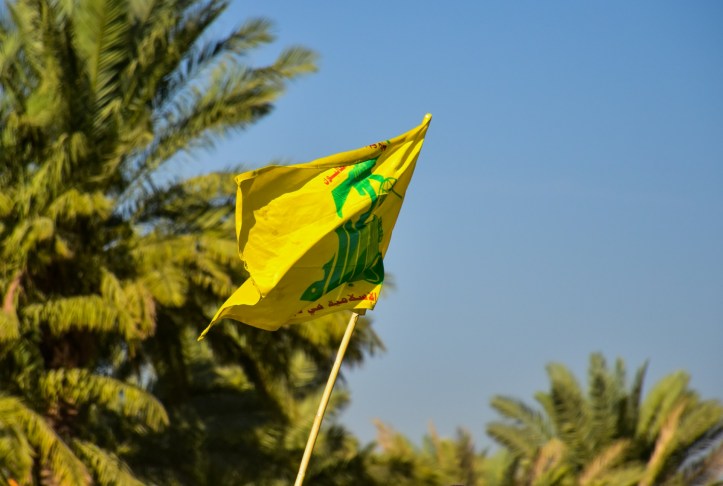
On June 26th, Lebanon and Israel signed the Trilateral Framework Agreement, negotiated and overseen by the U.S. The agreement details the path to ending hostilities and achieving “lasting peace and security” between Israel and Lebanon, with its focal point being the disarmament of all non-state armed organisations in Lebanon.[1] A driving force behind the negotiations has been the renewed conflict between Israel and Hezbollah, which erupted on March 2nd after Hezbollah fired rockets into northern Israel, following the assassination of Iran’s former Supreme Leader, Ayatollah Ali Khamenei.[2] The level of cooperation from both the U.S. and Israel with the Lebanese administration on the disarmament of Hezbollah has been considered nothing short of historic, particularly because Israel and Lebanon had not previously held direct talks since 1993.[3] Under the negotiated framework, the Lebanese Armed Forces (LAF) are being deployed into “pilot zones” in Zawtar al-Gharibyeh in Nabatiyeh, as well as in the two Lebanese villages of Froun and Srifia, in an effort to reintroduce state authority in these regions alongside the ongoing disarmament of non-state armed organisations, specifically focused on Hezbollah.[4] The broader commitment to disarmament follows from an earlier Lebanese State-led agreement to disarm Hezbollah – titled “Homeland Shield” – which was agreed upon in August 2025 and completed its first phase in January 2026.[5] However, disarmament is a difficult task, and efforts to disarm Hezbollah, Lebanon’s largest and most heavily armed militant organisation,[6] have stirred political contention and public pushback. This tension was exemplified through Hezbollah and Amal government officials walking out of early cabinet discussions on the disarmament process in August and September 2025,[7] and numerous protests that have erupted in response to the talks held with Israel.[8] Further, Hezbollah officials have said that disarmament will not be pursued until “a proper ceasefire” and “Israeli withdrawal” are reached,[9] contradicting the Israeli condition for its withdrawal, which is the full disarmament of Hezbollah. Hezbollah continues to refuse disarmament and the terms of the negotiated framework.[10]
The question of disarmament, its limited prospects, and what could follow from partial or full disarmament of Hezbollah is of growing importance. This article will contribute to the ongoing debate by identifying the current barriers to disarmament and by analysing the Lebanese State’s options to manage ex-combatants after disarmament. Before considering the issue of disarmament, it is crucial to understand the nature of Lebanon’s fragmented security landscape, the sectarian underpinnings of Hezbollah’s role in the country, and its social, political, and military hold within its constituencies.
Background: Lebanon’s fragmented security landscape and the role of Hezbollah
Lebanon operates on a power-sharing system of governance, in which executive and ministerial positions, as well as parliamentary seats, are allocated along sectarian lines. Lebanon officially has 18 different sectarian groups,[11] with the three largest confessions being Shi’a Muslims, Sunni Muslims, and Maronite Christians. Through the 1989 Taif Agreement, which officially ended Lebanon’s 15-year civil war, distribution of government representation shifted from a 6:5 ratio between Christians and Muslims respectively – as informally enshrined through the 1943 National Pact introduced with Lebanese independence – to a 5:5 ratio.[12] However, the distribution of power and understanding of demographics is significantly outdated, provided the last official census took place in 1932.[13]
The dialogue of violence, and the presence of armed organisations in varying forms, is thus not a new phenomenon in Lebanon. With the eruption of the Lebanese civil war from 1975-1990, virtually all political organisations mobilised armed militias of varying sizes and capacities, and the Lebanese Army split. Hezbollah is, in some ways, a product of this complex history – albeit not isolated from broader regional dynamics that fed into its founding – and continues to be an armed organisation which blurs the state–non-state dichotomy.[14] This is further complicated by its immense social presence that makes it much more than a political-armed hybrid organisation, but rather a deeply enmeshed social organisation as well.
A significant exception to the disarmament of militias after the civil war, which ended in 1990, Hezbollah maintained its arms. Although some scholars have deemed its political engagement a form of moderation or the “Lebanonization” of Hezbollah – which started with its participation in the 1992 elections – more critical accounts have framed this as more of a pragmatic adjustment rather than a total transformation provided Hezbollah’s political engagement remained underpinned by, and oriented in service of, its armed aims.[15] Thus, disarmament tugs at the organisation’s very core.[16] Indeed, Hezbollah’s ideology centers around the idea of “armed resistance,” which shapes and organises its social and political engagements. Today, Hezbollah remains highly integrated into civilian communities, and derives much of its support from within the Shi’a localities that live in the organisation’s strongholds in Beirut’s southern suburbs (the Dahieh), the Beqaa valley, and the South.
The issue of disarmament
Disarmament began prior to Operation “Homeland Shield”, under the November 2024 truce, and yielded notable success in the region south of the Litani.[17] One security official claimed that 90 percent of Hezbollah military infrastructure had been dismantled south of the Litani.[18] In the region north of the Litani, Hezbollah has rejected disarmament and has refused to cooperate with the Lebanese Armed Forces (LAF), for example through rejecting entry into storage units.[19] Hezbollah’s refusal to disarm is highly problematic for the Lebanese State which may risk civil strife if it pursues forced disarmament.[20] Due to its current hybrid position in the state, and more specifically due to the ongoing conflict with Israel, Hezbollah’s refusal to disarm is marked by the limited political “quid pro quo” between Hezbollah and the Lebanese government. For Hezbollah, an organisation that has been integrated into the political system since 1992 and has been able to simultaneously wage wars alongside elections, the net benefit of a total political transformation through disarmament is limited, and undermines the organisation’s ideological foundation. In this sense, if it disarms, what does it gain?[21]
Potential concessions and challenges
One possibility that has been floated to increase the appeal of disarmament is a process of limited integration of ex-combatants – or “Hezbollah elements.”[22] Although only briefly discussed by Lebanon’s President and former commander of the LAF Joseph Aoun, this process likely entails integration on an individual basis across units, with previous Hezbollah military structures dismantled. Theoretically, military integration would require a process of (re)socialisation as armed members of the LAF, where renewed military training would be required.[23] However, whether there will be substantial political will of ex-combatants to integrate into the central military, remains highly unclear.
The proposal for military integration is problematic not only due to limited political will, but equally due to its opposition by other political factions, who fear that integration would pose a “potential threat to the military’s cohesion [and] combat doctrine,” as well as the commitment to national loyalty rather than regional allegiances[24] – referencing Hezbollah’s ties to Iran. Conversely, Hezbollah’s secretary-general Naim Qassem has focused on the integration of Hezbollah within a “national defence strategy” whilst keeping the “resistance” intact.[25] This encapsulates the widening gap between the current Lebanese administration and Hezbollah, where the latter sees itself as part of the national security equation, and the former views it as an irreconcilable threat to that very equation, a perception-gap that is not new but is nonetheless becoming increasingly pressing. Politically, then, there remains substantial misalignment and ambiguity on what a process of integration (if any) would entail.[26]
However, the complexity around what type of military integration would take place is further complicated by the logistics of integration, which would need to align with the power sharing system that underpins Lebanon’s military. In accordance with the confessional system of the Lebanese State, the make-up of the LAF reflects the communal distribution of Lebanese demographics in their ranks,[27] through a mixed approach of ensuring that units are well-integrated into the central military structure, whilst maintaining sectarian quotas within units.[28] For example, this balance is reflected in brigades, which have sought to reach a 60:40 split between Muslims and Christians respectively, and a 50:50 split within special units including commando regiments, special forces, and Republican Guard, although further denomination-specific allocations are made within these broader splits.[29] Central integration is further reinforced through regular rotation of the unit deployments, where military units are rotated on a regular basis to break or prevent the establishment of close ties between units and the local communities they serve, as well as local politicians in these communities. In turn, this is aimed at preventing the development of external political or social loyalties.[30]
To this effect, any integration would have to be partial and scattered within the LAF. Although this has been alluded to in President Aoun’s statement that specified certain “elements” of the militia would potentially be able to join the LAF, this still prompts an important question on what would happen to the remaining ex-combatants. Current estimates place the LAF forces at approximately 60,000 personnel, and Hezbollah’s fighters at 40,000, illustrating just how limited integration would likely be to maintain confessional balance.[31] Additionally, any degree of integration could challenge public trust in the LAF – a critical component to multi-ethnic (or confessional) military structures,[32] given the significantly divided views on Hezbollah.[33] This is particularly pertinent given the amount of public criticism that Hezbollah has faced from parts of the Lebanese public for entering the current war with Israel.[34] Therefore, military integration, which would occur alongside the broader disarmament of Hezbollah, could incite criticism against the current Lebanese administration, in the case that integration undermines, or is perceived to undermine, the apolitical positioning of the LAF.
In spite of discussion around military integration, and the logistical challenges that accompany this, Hezbollah has continually rejected the possibility of full disarmament, which remains a critical barrier in itself provided the Lebanese State does not have the capacity to enforce forced disarmament, which could result in intense civil conflict.[35] The fear of civil strife is directly informed by past occurrences where Hezbollah has turned its weapons inwards, prominently exemplified by the May 2008 conflict where Hezbollah engaged in direct fighting with “pro-government forces” after the Lebanese government decided to dismantle and take legal action against Hezbollah’s telecommunication network,[36] an act Hezbollah claimed amounted to a “declaration of war.”[37] Indeed, the 2008 clashes were a crucial example of the LAF’s limited involvement in domestic conflict, which in this case enhanced its ability to manage the civil strife through its refusal to enter direct confrontation and engagement with Hezbollah.[38] However, 2008 set a dangerous precedent, as it demonstrated that Hezbollah could not be confronted domestically. Nonetheless, the current dynamics between the LAF and Hezbollah are distinct from those that shaped the occurrence and outcome of 2008, as the LAF is not limited to a de-escalatory role, but rather is positioned as the key actor in the implementation of Hezbollah’s disarmament. This prompts caution on the part of the LAF and the Lebanese State as efforts to limit Hezbollah’s military prowess continue. Therefore, the question of disarmament itself, the process of application, and the prospect of conflict it may bring, remain highly unclear.
Further, disarmament in any form does not translate into organisational disbandment, and thus the process of restricting Hezbollah is further complicated by the organisation’s hybrid nature, and the broader political landscape through which the militia operates. In this sense, Hezbollah can retain its social and political influence through its political wing and broader welfare engagement. However, for the prospects of disarmament, it is increasingly pertinent that the organisation commits to an explicitly political platform that is not engaged in militant activity. Nevertheless, provided all Hezbollah-affiliated organisations are proscribed by the U.S., and the Trilateral Agreement clearly states that any funds flowing to affiliated organisations must be stopped, the question of the organisation’s political survival, at least as a legally recognised political party and organisation within Lebanon, is equally unclear.
Lastly, as discussed above, the organisation’s ideology is shaped by its militancy as part of the “resistance,” and thus the dissolution of its armed wing and the transformation into a purely political party are not only unlikely, but contradict the organisation’s raison d’être, particularly, according to Hezbollah’s secretary-general Naim Qassem, if Israeli presence in Lebanon continues.[39] However, as Israel has asserted that it is unwilling to withdraw until Hezbollah is fully disarmed, Israeli presence in the South currently, at least, appears indefinite.[40]
Conclusion
The process of Hezbollah’s disarmament remains riddled with multifaceted challenges. Hezbollah continues to object to full disarmament, which constitutes the first critical barrier to disarming the organisation, as full transformation into a purely political organisation undermines Hezbollah’s ideological core. In the case that concessions are made to appease the organisation, for example through integrating some of its membership into the LAF, this would be limited to partial integration so as not to upset the confessional balance of the military.[41] Socialisation and intra-unit diversity will remain crucial to preventing external political allegiances that may undermine impartial military practice. Lastly, the sustainability of disarmament, provided Hezbollah retains its political and social infrastructure, must be assessed as well. Hezbollah is much more than an isolated militia. It is a community-embedded organisation with deep social influence and ideological roots within its strongholds. The military dimension cannot be considered in isolation from the social-political one.
For now, the central question remains whether the Lebanese government will be able to implement further disarmament without igniting domestic strife, and if so, what form of disarmament will emerge. Nevertheless, explicit planning for the reintegration of Hezbollah ex-combatants remains pertinent, and therefore next steps must be accounted for as disarmament proceeds.
Sadeen Haddad is an incoming PhD student at the University of York, where her research focuses on the dissemination of ideology by non-state armed organizations in Lebanon. Previously, Sadeen was a Research Associate with the Civil War Paths project. Her primary research interests include violence, civil war, and non-state armed organizations, with a regional focus on the Middle East.
Bibliography
Abou Zeid, Mario. Ten Years after Hariri’s Death, Are Lebanon’s Sunnis Still Leaderless?. Carnegie Endowment for International Peace, February 13 2015, https://carnegieendowment.org/posts/2015/02/ten-years-after-hariris-death-are-lebanons-sunnis-still-leaderless
Al Jazeera, Beirut hit by deadly street battles. Al Jazeera, May 10 2008, https://www.aljazeera.com/news/2008/5/10/beirut-hit-by-deadly-street-battles
Al Jazeera, Hezbollah chief rejects disarmament, demands Israel comply with ceasefire. Al Jazeera, 25 August 2025 https://www.aljazeera.com/news/2025/8/25/hezbollah-chief-rejects-disarmament-demands-israel-comply-with-ceasefire
Bachega, Hugo, Habibiazad, Ghoncheh, Greenhall, Robert and McArthur, Tom. Iran’s Supreme Leader killed in joint US Israeli strikes, Trump says. BBC News, February 28 2026 https://www.bbc.co.uk/news/articles/c70n9wlkx3lo
Bachega, Hugo. Lebanon seeks peace, but Hezbollah needs to be convinced first. BBC News, April 14 2026, https://www.bbc.co.uk/news/articles/cr51l794mlyo
Berti, Benedetta. Armed political organisations: from conflict to integration. Johns Hopkins University Press. 2013
Berti, Benedetta. What’s in a name? Re-conceptualizing non-state armed groups in the Middle East. Palgrave Communications, (2016), https://doi.org/10.1057/palcomms.2016.89
CFR, What is Hezbollah?. Council on Foreign Relations, March 2 2026 what-hezbollah
EPC, Between Monopoly and Dismantling: Prospects for Disarming Lebanese Hezbollah. Emirates Policy Center, May 19 2025 https://epc.ae/en/details/scenario/between-monopoly-and-dismantling-prospects-for-disarming-lebanese-hezbollah
France 24, Lebanese army dismantled ‘over 90%’ of Hezbollah sites near Israel, security official says. France 24, June 30 2025 https://www.france24.com/en/middle-east/20250430-lebanese-army-dismantled-over-90-of-hezbollah-sites-near-israel-security-official-says
Gritten, David and Debusmann, Bernd. Lebanese army says troops deploying in ‘pilot zone’ after Israeli withdrawal. BBC News, July 21 2026 https://www.bbc.co.uk/news/articles/cy8mynlmn55o
Harris, Alistair. The Cedar Dissolution: Lebanon’s Civil Strife. RUSI, May 15 2008 https://www.rusi.org/explore-our-research/publications/commentary/cedar-dissolution-lebanons-civil-strife
Henley, Alexander D. M. Religious Authority and Sectarianism in Lebanon. Carnegie Endowment for International Peace, December 16 2016 https://carnegieendowment.org/research/2016/12/religious-authority-and-sectarianism-in-lebanon
Kalkh, Jeanine. Is integrating Hezbollah fighters into the Lebanese Army a real option?. L’Orient Today, September 2 2025 https://today.lorientlejour.com/article/1475820/is-integrating-hezbollah-fighters-into-the-lebanese-army-a-real-option.html
Katz-Zoby, Quinn. The Delicate Dynamics of Hezbollah’s Disarmament. Arab Center Washington DC, August 25 2025 https://arabcenterdc.org/resource/the-delicate-dynamics-of-hezbollahs-disarmament/
Knell, Yolande. Israel says it will keep control over part of southern Lebanon after war with Hezbollah ends. BBC News, March 31 2026, https://www.bbc.co.uk/news/articles/c5yx8knpr5no
Koekenbier, Pieter . Multi-Ethnic Armies: Lebanese Lessons & Iraqi Implications. Conflict Studies Research Centre, June 2005 https://www.files.ethz.ch/isn/28634/05_Jun.pdf
Loft, Philip. Lebanon 2025: Plans to disarm Hezbollah. House of Commons Library, September 24 2025 https://commonslibrary.parliament.uk/research-briefings/cbp-10347/
L’Orient Today Staff, Hezbollah, Amal ministers to walk out of Cabinet session when disarmament plan is presented. L’Orient Today, September 4 2025 https://today.lorientlejour.com/article/1476144/resignation-of-shiite-ministers-haidar-warns-no-decision-yet-but-all-options-remain-on-the-table.htm
Loschky, Jay. Most Lebanese Say Only Army Should Have Weapons. Gallup, December 4, 2025, https://news.gallup.com/poll/699071/lebanese-say-army-weapons.aspx
Mansour, Mohammad.Israel-Lebanon direct talks in the US: All to know. Al Jazeera, April 14 2026, https://www.aljazeera.com/news/2026/4/14/israel-lebanon-direct-talks-in-the-us-all-to-know
Maguire, Dylan. Falling Together: Identity and the Military in Fragmented Societies, in: Contextualising Sectarianism in the Middle East and South Asia, e.d. Stagin Hamrah. Routledge India. 2023
Moussa, Nayla . Loyalties and Group Formation in the Lebanese Officer Corps. Carnegie Endowment for International Peace, Febuary 3 2016 https://carnegieendowment.org/russia-eurasia/research/2016/02/loyalties-and-group-formation-in-the-lebanese-officer-corps
Nagle, John and Clancy, Mary-Alice. Power-sharing after Civil War: Thirty Years since Lebanon’s Taif Agreement. Nationalism and Ethnic politics. April 10 2019 https://doi.org/10.1080/13537113.2019.1565171
Norton, A. Hezbollah: A Short History, Princeton University Press. 2007
Reuters, Hezbollah ministers, Shiite allies walk out of Lebanese cabinet meeting over disarmament proposal, sources say. Reuters, August 7 2025
https://www.reuters.com/world/middle-east/hezbollah-ministers-shiite-allies-walk-out-lebanese-cabinet-meeting-over-2025-08-07/
Reuters Connect, Hezbollah Protest Against Direct Diplomatic Talks With Israel. Reuters Connect, April 11 2026, https://www.reutersconnect.com/item/hezbollah-protest-against-direct-diplomatic-talks-with-israel/dGFnOnJldXRlcnMuY29tLDIwMjY6bmV3c21sX01UMVpVTUEwMDA1RUpNV0E
Shalev, Tal. Lebanon says first phase of plan to disarm Hezbollah completed, but Netanyahu warns progress ‘far from sufficient’. CNN, January 8 2026, https://edition.cnn.com/2026/01/08/middleeast/hezbollah-disarmament-israel-lebanon-conflict-intl
Tian, Yang and Sullivan, Helen. What we know about the Israel-Lebanon ceasefire. BBC News, April 17 2026, https://www.bbc.co.uk/news/articles/cwy32277e58o
U.S. Department of State. Trilateral Agreement between the United States, the State of Israel, and the Republic of Lebanon. U.S. Department of State. June 26 2026 https://www.state.gov/releases/office-of-the-spokesperson/2026/06/trilateral-framework-between-the-united-states-of-america-the-state-of-israel-and-the-republic-of-lebanon
Zafirov, Miroslav M. Israel and the new reality of buffer zones. Dispatched, Atlantic Council, July 10 2026 https://www.atlanticcouncil.org/dispatches/israel-and-the-new-reality-of-buffer-zones/
[1] U.S. Department of State. Trilateral Agreement between the United States, the State of Israel, and the Republic of Lebanon, June 26, 2026, U.S. Department of State, June 26 2026 https://www.state.gov/releases/office-of-the-spokesperson/2026/06/trilateral-framework-between-the-united-states-of-america-the-state-of-israel-and-the-republic-of-lebanon
[2] Hugo Bachega, Ghoncheh Habibiazad, Robert Greenhall, and Tom McArthur, Iran’s Supreme Leader killed in joint US Israeli strikes, Trump says, BBC News, February 28 2026 https://www.bbc.co.uk/news/articles/c70n9wlkx3lo
[3] Mohammad Mansour, Israel-Lebanon direct talks in the US: All to know, Al Jazeera, April 14 2026, https://www.aljazeera.com/news/2026/4/14/israel-lebanon-direct-talks-in-the-us-all-to-know
[4] David Gritten and Bernd Debusmann, Lebanese army says troops deploying in ‘pilot zone’ after Israeli withdrawal, BBC News, July 21 2026 https://www.bbc.co.uk/news/articles/cy8mynlmn55o
[5] Tal Shalev, Lebanon says first phase of plan to disarm Hezbollah completed, but Netanyahu warns progress ‘far from sufficient’, CNN, January 8 2026, https://edition.cnn.com/2026/01/08/middleeast/hezbollah-disarmament-israel-lebanon-conflict-intl
[6] CFR, What is Hezbollah?, Council on Foreign Relations, March 2 2026 what-hezbollah
[7] L’Orient Today Staff, Hezbollah, Amal ministers to walk out of Cabinet session when disarmament plan is presented, L’Orient Today, September 4 2025 https://today.lorientlejour.com/article/1476144/resignation-of-shiite-ministers-haidar-warns-no-decision-yet-but-all-options-remain-on-the-table.html; Reuters, Hezbollah ministers, Shiite allies walk out of Lebanese cabinet meeting over disarmament proposal, sources say, Reuters, August 7 2025
https://www.reuters.com/world/middle-east/hezbollah-ministers-shiite-allies-walk-out-lebanese-cabinet-meeting-over-2025-08-07/
[8] Reuters Connect, Hezbollah Protest Against Direct Diplomatic Talks With Israel, Reuters Connect, April 11 2026, https://www.reutersconnect.com/item/hezbollah-protest-against-direct-diplomatic-talks-with-israel/dGFnOnJldXRlcnMuY29tLDIwMjY6bmV3c21sX01UMVpVTUEwMDA1RUpNV0E
[9] Yang Tian and Helen Sullivan, What we know about the Israel-Lebanon ceasefire, BBC News, April 17 2026 https://www.bbc.co.uk/news/articles/cwy32277e58o
[10] Gritten and Debusmann, Lebanese army says troops deploying in ‘pilot zone’ after Israeli withdrawal
[11] Alexander D. M. Henley, Religious Authority and Sectarianism in Lebanon, Carnegie Endowment for International Peace, December 16 2016 https://carnegieendowment.org/research/2016/12/religious-authority-and-sectarianism-in-lebanon
[12] John Nagle and Mary-Alice Clancy, Power-sharing after Civil War: Thirty Years since Lebanon’s Taif Agreement. Nationalism and Ethnic politics. April 10 2019 https://doi.org/10.1080/13537113.2019.1565171
[13] Augustus Norton. Hezbollah: A Short History, (Princeton University Press, 2007)
[14] Benedetta Berti, What’s in a name? Re-conceptualizing non-state armed groups in the Middle East, Palgrave Communications, November 29 2016, https://doi.org/10.1057/palcomms.2016.89
[15] Benedetta Berti, Armed political organisations: from conflict to integration. (Johns Hopkins University Press, 2013).
[16] Hugo Bachega, Lebanon seeks peace, but Hezbollah needs to be convinced first. BBC News, April 14 2026, https://www.bbc.co.uk/news/articles/cr51l794mlyo
[17] EPC, Between Monopoly and Dismantling: Prospects for Disarming Lebanese Hezbollah, Emirates Policy Center, May 19 2025 https://epc.ae/en/details/scenario/between-monopoly-and-dismantling-prospects-for-disarming-lebanese-hezbollah
[18] France 24, Lebanese army dismantled ‘over 90%’ of Hezbollah sites near Israel, security official says, France 24, April 30 2025 https://www.france24.com/en/middle-east/20250430-lebanese-army-dismantled-over-90-of-hezbollah-sites-near-israel-security-official-says
[19] EPC, Between Monopoly and Dismantling
[20] Miroslav M. Zafirov, Israel and the new reality of buffer zones, Dispatched, Atlantic Council, July 10 2026 https://www.atlanticcouncil.org/dispatches/israel-and-the-new-reality-of-buffer-zones/
[21] EPC, Between Monopoly and Dismantling
[22] Ibid
[23] Jeanine Kalkh, Is integrating Hezbollah fighters into the Lebanese Army a real option?, L’Orient Today, September 2 2025 https://today.lorientlejour.com/article/1475820/is-integrating-hezbollah-fighters-into-the-lebanese-army-a-real-option.html
[24] EPC, Between Monopoly and Dismantling
[25] EPC, Between Monopoly and Dismantling
[26] Ibid
[27] Nayla Moussa, Loyalties and Group Formation in the Lebanese Officer Corps, Carnegie Endowment for International Peace, Febuary 3 2016 https://carnegieendowment.org/russia-eurasia/research/2016/02/loyalties-and-group-formation-in-the-lebanese-officer-corps
[28] Dylan Maguire, Falling Together: Identity and the Military in Fragmented Societies, in: Contexualising Sectarianism in the Middle East and South Asia, e.d. Stagin Hamrah. (Routledge India, 2023)
[29] Ibid
[30] Ibid
[31] Philip, Loft. Lebanon 2025: Plans to disarm Hezbollah, House of Commons Library, September 24 2025 https://commonslibrary.parliament.uk/research-briefings/cbp-10347/
[32] Pieter Koekenbier, Multi-Ethnic Armies: Lebanese Lessons & Iraqi Implications, Conflict Studies Research Centre, June 2005 https://www.files.ethz.ch/isn/28634/05_Jun.pdf
[33] Katz-Zoby, The Delicate Dynamics of Hezbollah’s Disarmament, Arab Center Washington DC, August 27 2025, https://arabcenterdc.org/resource/the-delicate-dynamics-of-hezbollahs-disarmament/
[34] Jay Loschky, Most Lebanese Say Only Army Should Have Weapons, Gallup, December 4 2025, https://news.gallup.com/poll/699071/lebanese-say-army-weapons.aspx
[35] Hugo Bachega, Lebanon seeks peace, but Hezbollah needs to be convinced first.
[36] Mario Abou Zeid, Ten Years after Hariri’s Death, Are Lebanon’s Sunnis Still Leaderless?, Carnegie Endowment for International Peace, February 13 2015, https://carnegieendowment.org/posts/2015/02/ten-years-after-hariris-death-are-lebanons-sunnis-still-leaderless
[37] Al Jazeera, Beirut hit by deadly street battles, Al Jazeera, May 10 2008, https://www.aljazeera.com/news/2008/5/10/beirut-hit-by-deadly-street-battles
[38] Alistair Harris, The Cedar Dissolution: Lebanon’s Civil Strife, RUSI, May 15 2008 https://www.rusi.org/explore-our-research/publications/commentary/cedar-dissolution-lebanons-civil-strife
[39] Al Jazeera, Hezbollah chief rejects disarmament, demands Israel comply with ceasefire, Al Jazeera, 25 August 2025 https://www.aljazeera.com/news/2025/8/25/hezbollah-chief-rejects-disarmament-demands-israel-comply-with-ceasefire
[40] Yolande Knell, Israel says it will keep control over part of southern Lebanon after war with Hezbollah ends. BBC News, March 31 2026, https://www.bbc.co.uk/news/articles/c5yx8knpr5no
[41] Katz-Zoby, The Delicate Dynamics of Hezbollah’s Disarmament

