By Suzanne Abou Omar su.abouomar@gmail.com
MSc in Modern Middle Eastern Studies, St Antony’s College, University of Oxford
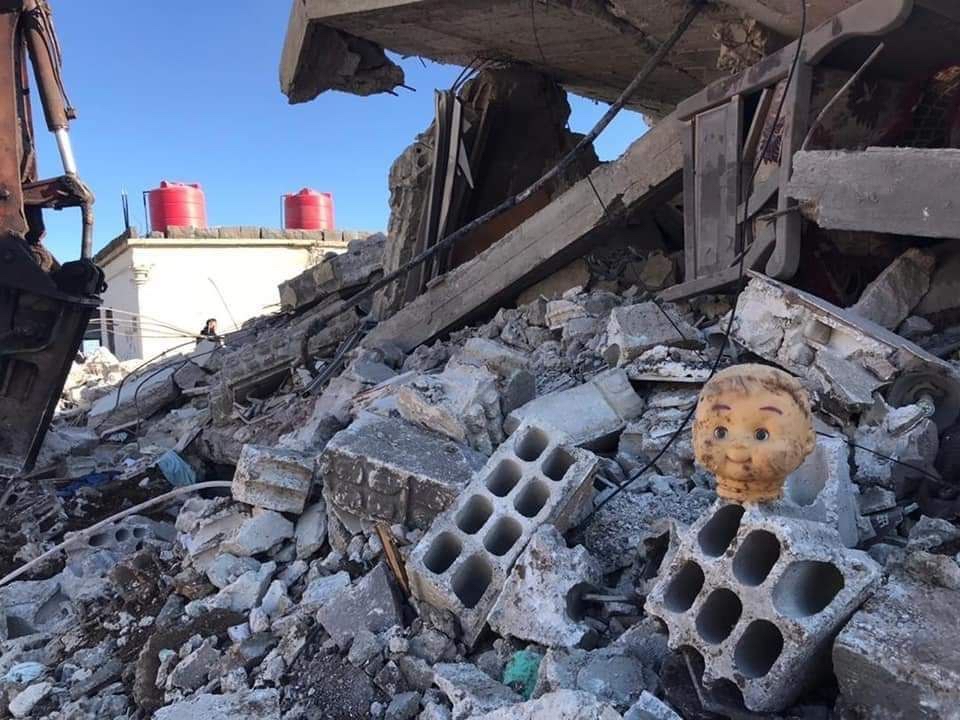
From live ammunition to barrel bombs and chemical weaponry, keeping track of the conflicting parties and methods costing ordinary Syrian civilians their lives has been challenging. However, on January 18, 2024, a new addition was made to the list: drug trafficking.
After the deterioration of the Syrian economy due to sanctions, drug trafficking has become the basis of the economy. It is suggested that the trade could be worth an estimated 30, 57, or even 110 billion USD. Not only has this led to severe effects on the Syrian population, like increased levels of addiction, it has also negatively impacted neighbouring countries. In 2011, Syria was suspended from the Arab League after the “harsh crackdown” on demonstrators. However, processes of normalisation with the Syrian regime began last year in an attempt to combat trafficking, making the trade of the drug Captagon not only the pillar of the economy but also Syrian President Bashar al-Assad’s diplomatic lifeline.
Syria’s drug trafficking has been a recurrent topic in the media and recent scholarship. Several reports covered this issue, including the BBC in its investigation and documentary on “Syria’s drug trafficking empire,” which established the links between Syrian officials and the drug trade. Similar claims were made in 2021 by a New York Times investigation. Globally, Captagon is the trade name of the fenethylline synthesised from amphetamine and 7-(2-chloroethyl) theophylline, composed by a German pharmaceutical company in 1961, and discontinued in 1986 after its ban by several European countries. In Syria, Captagon is the saviour of Assad’s family and their finances, their winning diplomatic card, and a new tool of oppression against minorities.
The Case of Sweida
After al-Assad issued a decree to lift fuel subsidies, doubling the price of fuel in conjunction with raising public wages, mass protests erupted on August 16, 2023, in Sweida City, the stronghold of the Druze minority. Such a decision had drastic overnight effects, raising commodity prices by 200% and depreciating the Syrian currency from 7,000 Syrian Pounds to one USD at the beginning of 2023 to 15,000 Syrian Pounds to one USD in August 2023. Immediately after issuing the decrees and a new reality of soaring food and transportation prices, a massive wave of protests calling for the overthrow of the regime started in Sweida and is still ongoing since August 2023. Dozens gather in Sweida’s central Karameh Square daily, and thousands on Fridays. Surprisingly, the Syrian Government did not follow its usual violent approach towards protesters. Apart from defamation and attacks in Syrian state-owned media and three separate violent incidents, the government remained silent and ignored the protesters as well as their demands.
This changed on January 18, 2024, when an airstrike supposedly conducted by the Royal Jordanian Air Force targeted two villages in the Sweida governorate, causing the death of ten civilians, including five women and two children. This was not the first Jordanian airstrike on southern Syria. Due to increased drug trafficking on the border with Jordan, Jordanian security forces have adopted a “‘shoot-to-kill policy” against traffickers since January 2022. Additionally, several airstrikes have taken place previously, attempting to target drug dealers. However, the 18th of January airstrikes were different from the previous ones, as the civilians killed were not linked to any drug-related activities and were active participants in the popular uprising in Sweida.
As the initial suspicion was that the Jordanian air force received incorrect information from the Syrian government, the largest Druze military faction in Sweida announced their readiness to “pursue all those involved in drug smuggling and trafficking after the Jordanian side presented lists of the names of those involved.” The Jordanian side did not respond or make any official statements related to the airstrike or the faction’s proposition.
The first official comment by the Syrian Ministry of Foreign Affairs was on January 23, 2024. The statement expressed “deep regret over the airstrikes directed by the Jordanian Air Force on several villages and areas within Syrian territory.” The ministry blamed the “parties that contributed to the war on Syria” for the spread of terrorist groups and the activity of murder, criminal gangs, smuggling and illegal trade, especially on the border with Jordan. Furthermore, it stressed the absence of justification for such military operations within its territory and its attempt to contain them to prevent tensions that would impact the restoration of the “brotherly relationship between the two countries.”
A few hours later, the Jordanian Foreign Ministry responded on X (formerly Twitter) that they reject any implications that the Jordanian border was ever the source of threats to Syria’s security or a crossing point for terrorists. Statements have emerged that the Syrian government did not take any real action to neutralise the threat of drug smuggling, despite providing the names of the smugglers and the parties behind them during the Syrian-Jordanian joint committee meetings. The statement added that “Jordan is ready to move forward in coordination with the Syrian government to stop smuggling operations and hold its perpetrators and supporters accountable” and “will continue to confront the smuggling of drugs and weapons across the Syrian border.”
Notably, Jordan has emphasised its interest in the safety of the Syrian people and the brotherly relationship with the people of the southern cities, underscoring its commitment to accepting Syrian refugees to shield them from war. However, this recent escalation stems from the tragic loss of several members of its security forces during confrontations with drug traffickers along the Syrian border and the heightened incidence of drug smuggling, which is perceived as a direct threat to Jordan’s national security.
Weaponization of Drug Trafficking
These statements raise several questions and concerns. First, why did Jordan ignore the Druze faction’s initiative to cooperate and eradicate drug smugglers, given that they would be the most effective partners in this case? The local Druze community can help resolve the issue and are willing to do so. Second, given the investigations and links of top Syrian officials to drug production, why does Jordan view the Syrian Government as a fit counterpart in its fight, given the financial and diplomatic benefits the latter side stands to gain from the continuance of this cross-border trafficking? Jordan has previously attempted to cooperate with Syria, but “the Syrian government did not take any real action to neutralise the threat of drug smuggling,” in Jordan’s own words. Third, the airstrikes of January 18, which killed an activist along with his family, did not lead to any international, regional, or real Syrian reactions, with the Jordanian side still willing to cooperate further with Syria to resolve the security issue of its northern border afterwards. Given this context, how likely is it that Syria will use the drug trafficking issue against its Druze community by providing locations of activists?
While these concerns and questions might be clarified with time, at the moment, the Syrian regime does not seem willing to curb its drug trade, nor does Jordan express any enthusiasm to work with the local groups and community in Sweida. Interestingly, Syria refutes any collaboration with Iranian-backed militias in this trafficking, while Iran and Hezbollah assert that the accusations of smuggling are a “Western fabrication.”
Local groups and communities in Sweida have independently caught several drug traffickers over the last few months and seized and destroyed a large drug shipment that was intended for smuggling to the Gulf. Therefore, it is evident that the Syrian regime cannot be trusted, and, going forward, only local groups in Sweida can potentially guarantee the safety of civilians and effectively help with the trafficking problem.
 The Oxford Middle East Review