By Muhammad Numan, National Defence University Islamabad
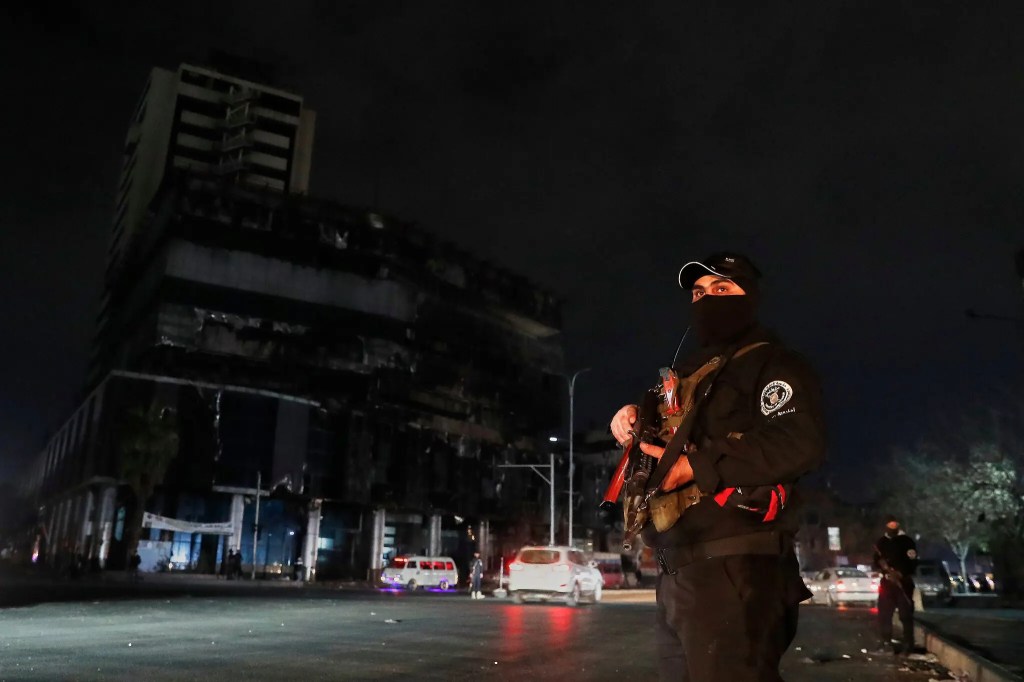
Amid the destroyed buildings and marks of gunpowder on the walls, hopes for peace had begun to rise in the streets of Syria. Yet, this delicate peace was shattered once more in the recent clashes between Druze militias and Syrian government forces in Sweida. With hundreds of deaths and tens of thousands displaced, these clashes have proven to be even more deadly in terms of casualties than the final assault by Ha’yat Tahrir al-Sham (HTS) against the Assad regime. Back in June 2025, Mar Elias Church was hit by a suicide bomber in Damascus, costing the lives of 25 people. The clashes in Sweida and the Damascus bombing have also resurrected fears amongst minority groups in Syria, who were generally unsure about their future in a post-Assad Syria. Clashes had previously reignited between remnant militia groups and the forces of Syria’s current government. These deadly clashes were primarily launched by the remaining loyalists of the deposed regime in March 2025. Causing over 1,400 casualties, this was the first major military challenge faced by President Ahmed al-Sharaa and his government. The continued eruption of clashes and sectarian violence points to the vast security gap that still haunts the Syrian transition, and the longevity of powerful sectarian militias.
The security forces under the Assad regime were dismantled after the regime fell. While some of these former military personnel surrendered and joined the current Syrian government, most remain unaccounted for and are likely aligning with Assad-loyalist factions, and engaging in armed resistance against Ahmed al-Sharaa’s government, according to the Institute of the Study of War. If not reconciled or formally engaged, they will possibly seek new fronts for conflict, much like Iraq’s military did after the United States dismantled Saddam Hussein’s forces in 2003. Already, pro-Assad elements appear to be gradually regrouping in the Alawite strongholds of north-western Syria, as indicated by deadly clashes along the Latakia-Tartus axis.
When the United States, along with coalition forces, launched the military campaign in Iraq in 2003, Iraq’s army and most of its security infrastructure were dismantled as part of the de-Ba’athification process. Hundreds of thousands of people with military experience, when left jobless, began to involve themselves in various small groups and resistance militias. Gradually, the US military began to face fierce resistance from these groups, increasing casualties among US troops and further prolonging years of destabilisation and militancy in Iraq. A situation similar to this was created when the Bashar al-Assad government was overthrown in a blitz offensive by HTS. With support for Assad’s regime from its foreign allies, particularly Iran and Russia, heavily reduced, the Assad regime fell apart, unable to survive the increased opposition. Hundreds of thousands of personnel who were previously part of the security forces in the Bashar government were suddenly jobless. Many of these men surrendered and joined the transitional government, but many others remain at large, potentially posing a threat to the government. The recent clashes between the forces of the current government and remnants of the Bashar forces, followed now by a devastating suicide bombing in the heart of Damascus and the clashes in Sweida, indicate that it is a difficult task for the government to establish peace and control throughout Syria.
Local support, especially amongst the Alawites, for these militias will determine the outcome and future of this pushback against al-Sharaa’s government. Also, if these disbanded groups somehow establish stable external support (possibly from former supporters of the Assad regime, including Iran, Russia, and Hezbollah), these leftover militias could once again push Syria into a proxy battlefield. These militia groups, if they cannot topple the current Syrian government, can still pose a constant militant threat to President al-Sharaa’s regime. The government’s policy towards the pro-Assad militias is evident from President al-Sharaa’s uncompromising stance, urging them to surrender or face consequences. The same policy was adopted by Bashar al-Assad against the Syrian rebels; it didn’t work for him, and time will tell if al-Sharaa’s government has more success with these groups.
Syria is going through a transitional period, one that is highly sensitive and pivotal for its future. If there is a fair distribution of power in Syria, there is a strong chance that Syria can get back on track, and the rebuilding and redevelopment process can start. But if there is a tussle for power and the central government attempts to seize all power, as the Assad regime did, without distributing power or considering local groups, or if groups such as the Assad loyalists and Druze resist central authority, then the smoke will keep rising from Syria.
The Damascus agreement between transitional government and the Syrian Democratic Forces (SDF) was a major step towards power-sharing and stability in Syria. The rapidly shifting dynamics of the region will also have a huge impact on the future of Syria. Israel was already holding strategic areas in the south of Syria and advanced further into Syria after the Assad regime fell, posing another major challenge for the emerging government. If Syria remains unstable after the revolutionary shift, it could create favourable conditions for Israel to exert both political and military influence, as evident by the recent airstrikes by Israel in Syria in support of the Druze militias. The conflict in Syria has always been more than just a domestic civil war, as its internal instability has repeatedly spilled over into neighbouring states, also drawing actors like the United States, Turkey, Russia, and Iran into the fold. As stated by Kofi Annan a decade ago, “Syria, unlike Libya, has not imploded. If anything, it is likely to explode, and explode beyond its own borders.” It acts as a reminder that any sustainable resolution is not just limited to domestic reconciliation but will also take into account any regional and international agendas at play.
During the Arab Spring, Syrians stood up against the authoritarian Assad regime to achieve democratic representation, which was followed by brutal oppression, civil war, and ultimately the collapse of the Assad regime. Now that the regime has gone, the question remains: will the people of Syria finally secure these rights, or will they continue to struggle with new names and deeper wounds? It will depend on the choices made by current Syrian leaders whether Syria will witness a new era of stability or fall back into the shadows of the past. The stakes for the future of Syria are not just national but regional, and it will echo across the Middle East, for better or worse.
 The Oxford Middle East Review