By Mahdi Ghuloom, MSt Candidate at St. Cross College, Oxford and Security Analyst for Le Beck International
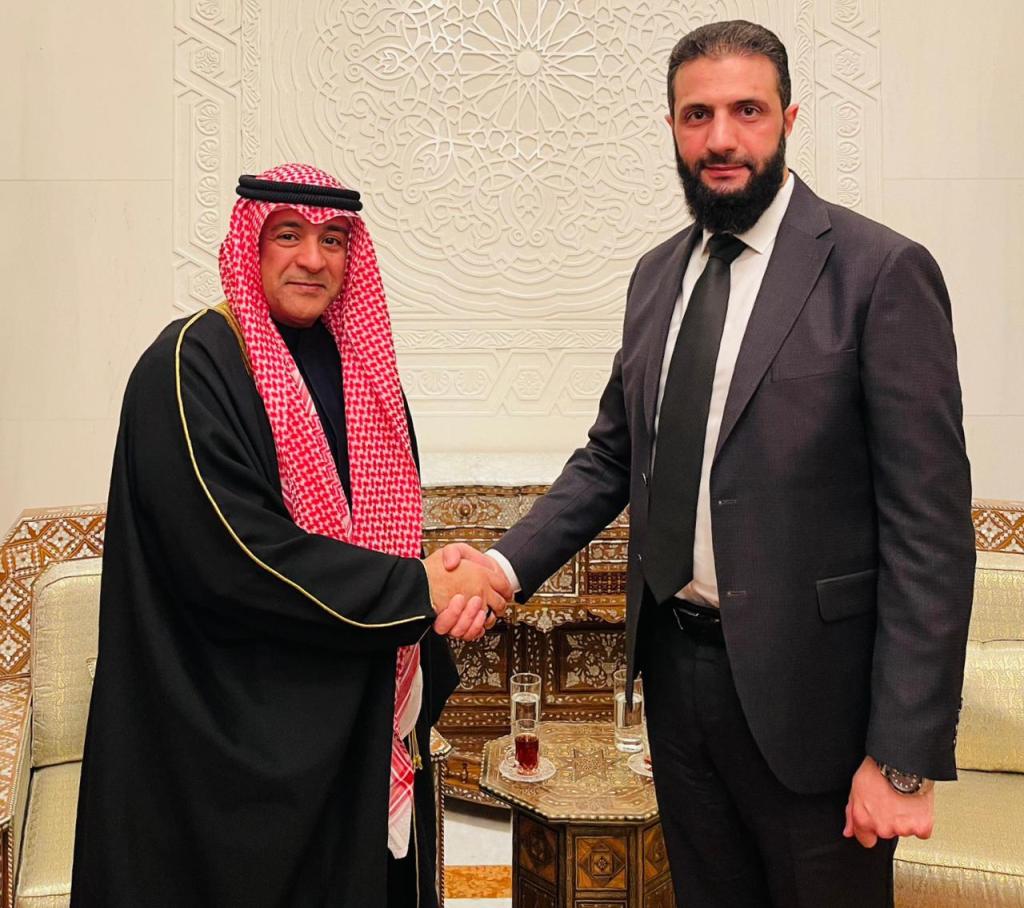
As Western media and officials approach the new Syrian transitional government cautiously, in the hope that an inclusive form of governance will emerge, the Gulf States share their caution, but with an eye for security and stability in Syria. Though it is true that the two can be interlinked, the concern from the Gulf States is that a lack of security in Syria could lead to spill-overs – and what is important for them at this stage is a regime that can enforce stabilising measures, preserve Syria’s territorial integrity, and ultimately contribute to regional security. Their vision is not for a liberal democratic Syria – although the Gulf is in no position to get in the way of that in any case – but for a stable, secure Syria that can leave the former chapter behind.
Another big concern for Gulf governments is that the conflict in Syria has polarized domestic opinion, to the point of driving some Khaleejis towards extremism. As a Bahraini, I vividly remember this polarity in worldviews that the Syrian revolution of 2011 bred amongst my co-nationals. It is true that the Arab Spring was at its peak, and many naturally found themselves supporting or opposing different revolutions across the Arab world. However, Syria was an area of contention that revealed a disturbing dynamic.
People seemed to rally behind sectarian priorities, with radicalized Shiites going to the extent of supporting Hezbollah and Iran’s interventions in Syria, and radicalized Sunnis showing support for extremist groups such as al-Qaeda and the Islamic State (IS). This was indeed surprising. Assad was a brutal dictator, who garnered dislike even from the Gulf Governments who appeared resistant to the wave of change spiralling across the region. Yet, this chance to achieve public unity in calling for some humanitarian progress in the wider region was overshadowed with other realities.
As the Gulf states dealt with these domestic sectarian dynamics, and the threat of both Sunni and Shiite Islamist radicalism in their own countries, their policies became increasingly pragmatic. This led to several overtures to Bashar al-Assad, as his reign seemed to be more resilient than expected.
Saudi Arabia and the UAE took the lead in these overtures. Saudi Arabia appointed a chargé d’affaires to Syria and opened an embassy in 2024, having had no such diplomatic representation since 2012. Around the same time, the UAE named its first ambassador to Syria since the start of the Syrian civil war. Both countries also appeared to lead efforts to reintegrate the Assad regime into the Arab League, with Bashar al-Assad attending the last two summits. Moreover, the UAE hosted Assad on a visit in 2022, in his first visit to an Arab country since the war broke out.
Perhaps choosing that particular moment in time to normalize with Assad coincided with overtures being made to Iran around the same time. It came as Saudi Arabia and Iran had started their most recent détente, and a general push amongst Gulf countries to rekindle ties with Iran despite tensions spanning issues such as territorial integrity and political interference. It also came ahead of any sign that Assad would be critically weakened after several blows against the ‘Axis of Resistance’ and the distraction of Russia in the same year.
These late overtures to the Assad regime may, however, threaten their position with the rebels now in power. While the latest statements by Syria’s new leader, Ahmed al-Sharaa seemed to flirt with Saudi Arabia by saying “I am proud of everything that Saudi Arabia has done for Syria, and it has a major role in the country’s future,” the UAE has not received the same show of support. The UAE has also not been the destination of a visit by Syria’s new leadership, as opposed to Saudi Arabia, although reports indicate that the new Syrian foreign minister may end up visiting the UAE soon.
This may be due to a grudge from the side of the new Syrian leadership: the President of the UAE was one of the last leaders from the Arab world to speak to Bashar al-Assad by phone, and Abu Dhabi was reportedly asking Washington to lift US sanctions in return for concessions by Assad, offering him financial incentives to break with Iran. It may also be due to the UAE being the most cautious of all Gulf countries in dealing with Islamism, and it not being convinced yet that the new leadership is stable nor trustworthy.
Nonetheless, the UAE’s Foreign Minister Abdullah bin Zayed held a phone call with his Syrian counterpart Asaad Hassan al-Shaybani, indicating some progress in relations. Moreover, shortly after Assad’s fall, Saudi Arabia, the UAE, Bahrain, and Oman resumed their diplomatic activities in Syria. Meanwhile, Oman has maintained a low profile in its policy towards Syria, as is customary with the Sultanate’s approach to foreign policy.
From a regional standpoint, Bahrain, as head of the Arab League this year, also sent a letter of support to the Syrian transitional government. The Secretary General of the Gulf Cooperation Council (GCC), Jassem al-Budaiwi also expressed the GCC’s support for the aspirations of the Syrian people for stability and development, while an extraordinary ministerial meeting of the council led to a call to lift international sanctions on Syria.
Notably absent from the discussion above is Qatar’s role, and this is for one key reason: Qatar remained steadfast in not normalising with the Assad regime. In fact, it is this history which likely lends Doha credibility and good favour with the rebels now in power. Indeed, Qatar appeared to be the first country in the Gulf to speak with the leading Syrian faction in power now, Hayat Tahrir al-Sham (HTS).
While other Gulf States may have concern about the rise of unmoderated Islamist power in Syria, Qatar has no concerns of associating with Islamists such as the HTS, as it has done so in the past with other Islamist groups. Indeed, their only attempt to address the group’s historic nature and their former links to al-Qaeda, was made by Qatari foreign ministry spokesperson Majed al-Ansari who said that “we are hopeful they will be a reasonable and rational player in the future”. Notably, Qatar has since opened its embassy in Damascus as well, with Qatar’s minister of state at the foreign ministry, Mohammed al-Khulaifi, leading the first high-level Qatari delegation to Damascus.
Indeed, this hope that a formerly radical group could become an exemplar of moderation over time appears to be driving the new relations between the Gulf States and Syria. While they may welcome the weakening of Iran’s influence in Syria, a big concern will be the emboldening of various Islamist factions to undermine the territorial integrity of the nation. Another concern will be the formation of a regime that undermines state institutions.
Anwar Gargash, senior diplomatic advisor to the President of the UAE has expressed this concern directly, by saying: “We don’t know about the shape of developments in Syria. Is this going to be a sort of wiser group that will be able to actually transcend, as I mentioned, Syria’s tortured history, or are we going to go back into a reincarnation of radical and terrorist organisations playing a major role?”
Perhaps the most crucial element of the Gulf States’ goal of securing Syria’s stability will be financing reconstruction efforts. The Gulf has long engaged in what has been dubbed by the International Institute for Strategic Studies as ‘Gulf Bailout Diplomacy’, and time will tell how many resources it is willing to invest in rebuilding the Syrian nation. Ahmed al-Sharaa, head of Syria’s new administration, has already noted that Qatar has expressed its readiness to invest in key sectors, including energy and port infrastructure. The Gulf States have also started to express their readiness to support the voluntary return of Syrian citizens to contribute to rebuilding their homeland, with Bahrain leading such efforts so far as announced after the visit of the head of Bahrain’s Strategic Security Agency to Damascus.
Looking forward, the Gulf States will also keep an eye on the impact of Syrian developments on their domestic politics. Both the UAE and Kuwait host significant numbers of the Syrian diaspora, with Kuwait ringing alarm bells against expatriates partaking in joyous marches. The ministry of interior issued warnings of retribution for such actions, including “administrative deportation from the country”, stressing “the need to abide by laws”. Meanwhile, Saudi Arabia, Kuwait and Bahrain, but especially Bahrain, will also be concerned about the safety of their Shiite populations travelling to Syria for religious visits to the Seyyeda Zainab Mosque and other such holy sites for Shiites. However, one would hope that tourism between the Gulf States and Syria would extend beyond such visits, with a return to the tourism flows that Syria needs more than ever, and for which Gulf populations are likely eager.
To sum up, the Gulf States’ pragmatic approach to Syria underscores their prioritization of stability and security. While Qatar’s steadfast opposition to Assad has earned favour with the transitional government, the broader GCC position reflects a shared focus on reconstruction and regional security. Should the Gulf be willing to finance Syria’s recovery, it will pair it with cautious diplomatic engagement to balance between wholly supporting the nation and mitigating ideological extremism.
 The Oxford Middle East Review